
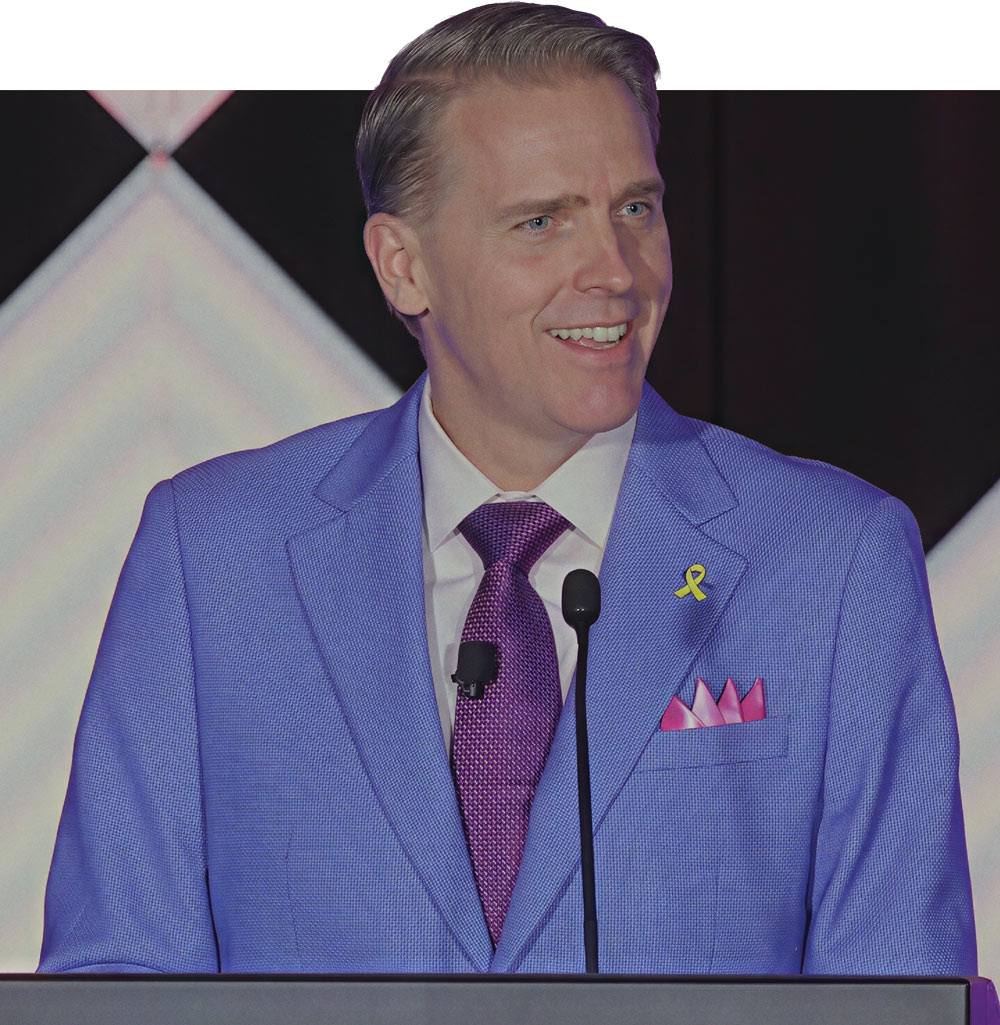
Scott Jennings should not have been a Republican. Growing up in Dawson Springs, Ky., his grandfather was a Democratic politician, and so was his father, a union factory worker who held local office from time to time. “Yeah, by all accounts, I probably should’ve become a Western Kentucky rural Democrat,” Jennings says with a laugh, his unmistakable Southern cadence coming through immediately. “A lot of folks follow their family’s lead, but I’ve always had a contrarian streak in me.”
Jennings’ political views began forming while watching the Republican Revolution of 1994, when Newt Gingrich and a new class of conservatives was taking the country by storm. He was very impressed with their viewpoints and how they marketed them. He also didn’t care much for Bill Clinton. “I mean, he was a smooth guy, but I didn’t find his personal behavior or his brand of politics very appealing.”
Not even Clinton’s saxophone playing on “The Arsenio Hall Show,” a moment that made many young people first view a politician as “cool,” could persuade Jennings. He chuckles at the memory. “It’s funny; I understand why a candidate would do a stunt like that, but it had no impact on me.”
With that, Jennings registered as a Republican and cast his first vote in 1996. “It came as a big shock to my family,” he says with a wry smile. “That’s probably when that contrarian streak first manifested.”
When asked about a memory of Bush that has stayed with him over the years, he thinks for a moment before settling on the 2006 midterm election. Jennings recalls how many strategists wanted Bush to make major national security decisions to try to influence the outcome of the election—but the president refused. “Bush operated with a strong moral compass and a lot of integrity. He never put politics ahead of what he thought was right, particularly on national security.”
Jennings says some politicians will try anything to salvage a couple of points in the polls, but Bush wouldn’t budge, even under intense pressure. “We need people who are courageous enough to cast politics aside and do the right thing, and he fit that bill.”
After the midterms, when Republicans lost control of Congress, Jennings remembers an impromptu staff meeting. “We’d been shellacked, but the President pulled everyone together and said ‘Yes, we took a thumpin’, but we worked hard and I’m proud of you all.’ It was just an honest, human moment. So, that’s something I remember and something I’ve always admired about him.”
Unfortunately, there can be times when opponents ignore facts or a compelling argument out of emotion or bias. When that happens, Jennings is certain there will still be an audience out there that recognizes who came armed with the facts and made the stronger case. “I think if I were applying this to the setting you described, where a developer is going up against an unreasonable city official, knowing your stuff might make a difference in moving the ball with the other people in the room.”
Holding up a hand, he adds, “But that doesn’t always mean you’ll succeed. I don’t always win either, because sometimes I’m debating people who are extraordinarily smart and prepared themselves, like David Axelrod or Van Jones, so I often have worthy opponents just like people in your industry.”
Beyond industry-specific impacts, Jennings believes there are broader signs of economic improvement. He points to inflation data as evidence that price pressures are easing, which should help everyone.
“Month-over-month inflation data in mid-July showed the biggest one-month drop since April of 2020, so I do think we have seen a calming of the inflation waters. That doesn’t mean there’s no inflation, but we’re not seeing what we did during the Biden administration, so that’s No. 1.”
He goes on to say, “No. 2, depending on your industry, I do think the administration’s policies have led to some incentive for investment. Some industries have put capital into jobs and economic expansion in the United States, and they have directly said, ‘This is because of the President.’”
Jennings also applauds the decision to make Trump’s 2017 tax cuts permanent, calling it a clear, unequivocal success that benefits the economy and working-class Americans. Though he’s certain Democrats could make the argument that the cuts are working against these individuals, he says the proof will be in the midterm results. “That’s sort of the point of an election, right? Both sides make their case, and you see where the chips fall, so we’ll see in November.”
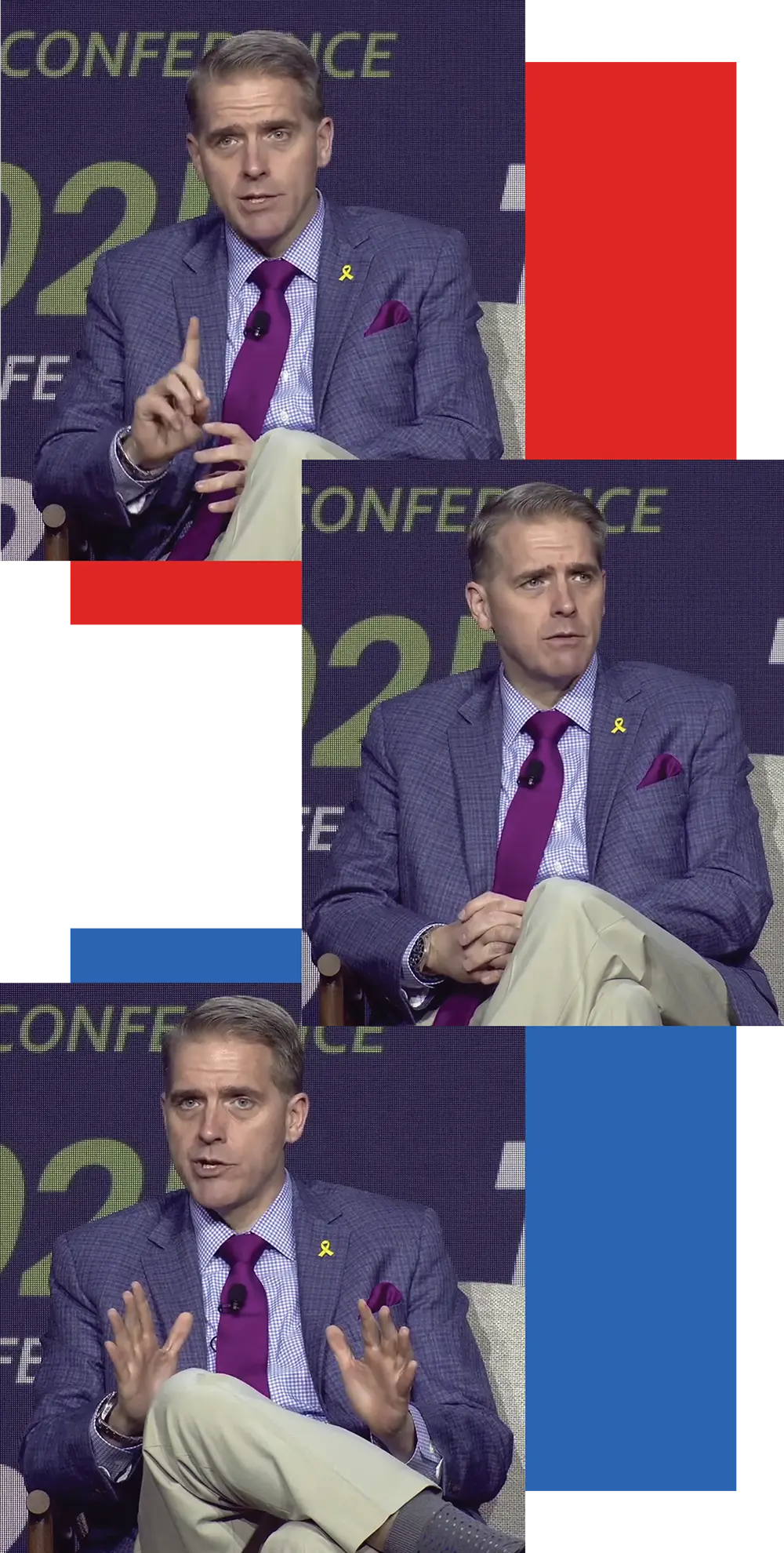
On the regulation front, Jennings also thinks Trump has largely been consistent with what you would expect a conservative to do: reduce government regulations. “The federal government is as small as it’s been since 1966,” he notes. “Every Republican I’ve ever worked for has said they were going to shrink the government—Trump actually did.”
Of course, government regulation remains a thorn in the sides of many self-storage owners as more states crack down on the industry, with January’s California Senate Bill 709 and NYC Local Laws 162 and 171 raising eyebrows and concern.
“Everyone is impacted at the federal level, but some of the most dramatic policy changes are happening at the state level,” says Jennings. “You’re getting wildly different outcomes depending on whether you live in a blue state or a red state. I’m sure your people in self-storage have experienced that.”
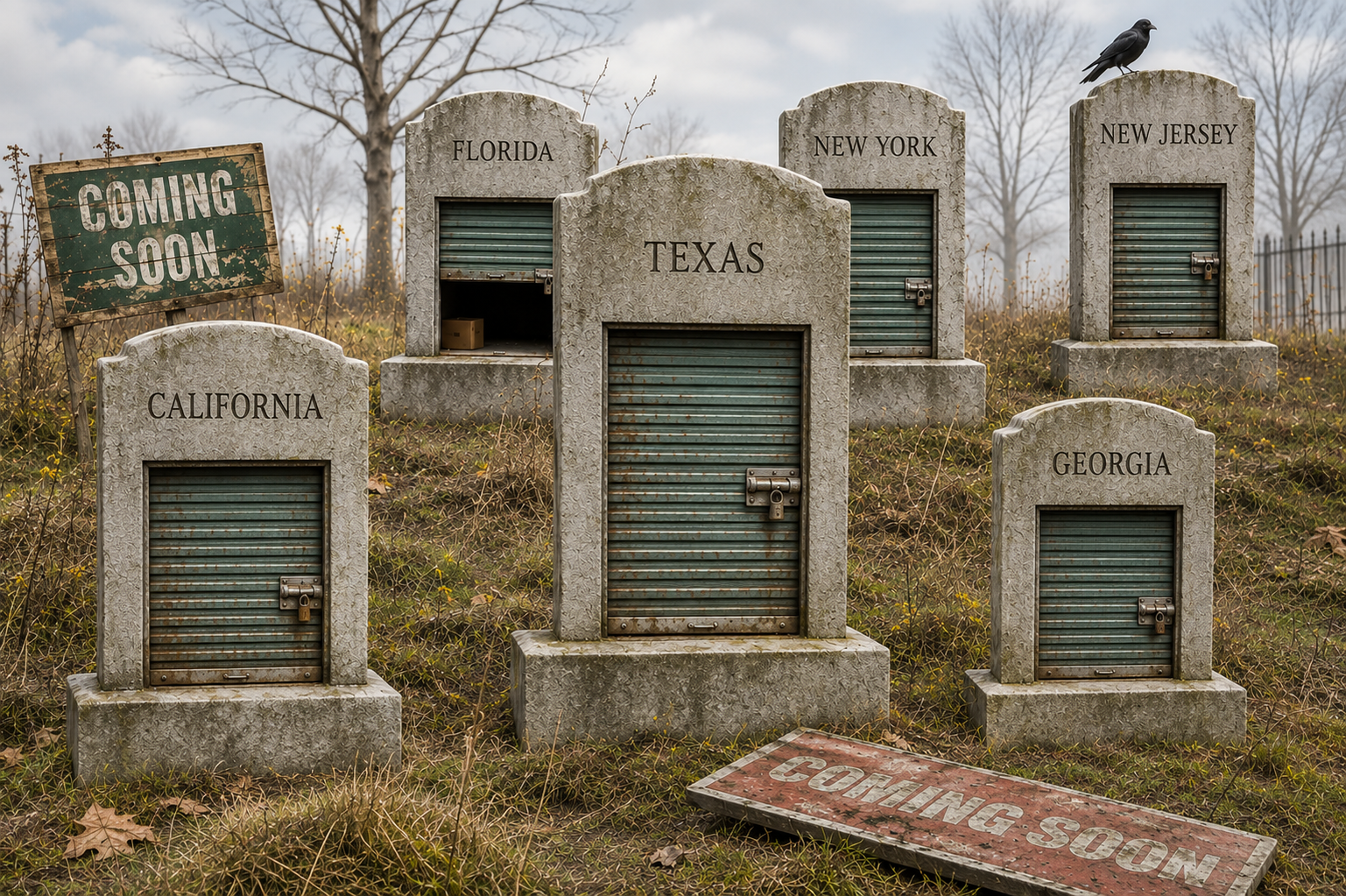
Many business owners Jennings has spoken with have been taking note of the radically different business environments across states. “The business environment in, say, Florida or Texas is so much different than a California or a New York. It’s just drastic when you have states that have been run for years by Democrats. The regulatory environment is wild.”
Following the midterms, Jennings expects the experiences of self-storage operators to be different based on location and size. “If you’re a large one, then you’re obviously existing in lots of different locations, so the variability in your policy outcomes is probably vast. If you have one or two facilities, chances are you’re in the same location, so the variability is smaller.”
After spending an hour with Scott Jennings, something becomes clear: Whether challenging his family, deliberating with peers, or making a case for his country, he’s not simply a contrarian—he follows his convictions. And for Jennings, those aren’t up for debate.
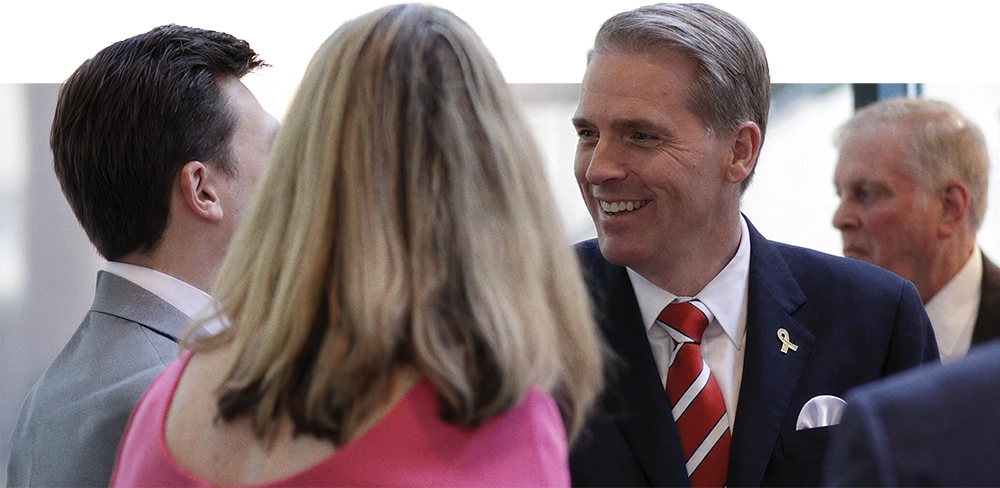
Get to know more about Scott Jennings.
Something people often get wrong about you: Folks usually assume I live in Washington or New York. Truth is, I’m in Kentucky. I have a lot of windshield time commuting to those cities, but I’m one of the few TV pundits who doesn’t live there. I think it’s healthy because it informs my commentary. You certainly get a different perspective on the issues of the day when you’re talking to folks out here versus the city.
A hobby of yours that people would not expect: I have over 30 chickens that I take care of—I call these my chicken chores. We have them for eggs, not to eat them; we love them too much. We recently did have a fox incursion and lost a few, but that’s part of the chicken business. The problem with chicken is everyone thinks it’s delicious, from people to foxes to hawks, so you’re constantly defending your chickens from the animal kingdom.
A typical Saturday at the Jennings’ household: The kids and I will usually play some wiffle ball or basketball in the driveway. Then I’ll walk the dog, mow the yard, and do other chores. After I’ve been on the road, it’s just nice to be home taking care of the property. The whole family will often go to a Louisville Bats minor league baseball game, or collect wood for the backyard fire pit and sit around it in the evening.
Favorite place to be outside the U.S.: I haven’t actually logged that much international travel. I’ve been to Europe a couple of times and really enjoyed France, and I took a tour of Japan a few years ago and enjoyed that too. As for where I’d like to go: Italy and Australia. I’m hoping to make that happen very soon.
Last book you read: “Darkest Hour,” about Winston Churchill bringing England back from the brink of defeat, and “Regime Change,” about Trump. But this may surprise you, I also love “Star Wars” books and have a couple of those going at any given time. Lately, I’ve really embraced Audible, but I don’t retain information as well when listening. So—and this is going to sound weird—I sometimes get the book and read along.
Last TV show you binged: “John Adams” with Paul Giamatti. It’d been in my queue because of America’s 250th. It’s so good. When Adams loses the election of 1800 and he’s leaving the White House, there’s a bunch of random people watching. He’s like, “Stop gawking! I’m just an ordinary citizen like you!” He throws his luggage in a horse-drawn carriage and leaves in a huff. It’s just a terrific scene.
A song you’d gladly play on repeat: I’ll answer it this way: I love professional wrestling entrance music, and so, whenever I’m getting ready to do a big debate show on CNN, I almost always put on Hulk Hogan’s “Real American” or The Undertaker’s music to hype myself up. Depending on what mood I’m in, my colleagues either get the Hulkster or the Undertaker.
Brad Hadfield is MSM’s lead writer and web manager.
Popular Posts

Joe Shoen is taking a stand. In our...

Self-storage software is no longer...

Joe Shoen has had enough.

The self storage industry is in a precarious...
From policy pivots in Ottawa to tariff...
Joe Shoen, CEO of U-Haul, has had enough.
This interview is from July 24, 2024.

In a record-breaking deal finalized May 12,...
Some recent lower court decisions have been...

Rising tides lift all ships, but in 2025 it...
Recent Posts
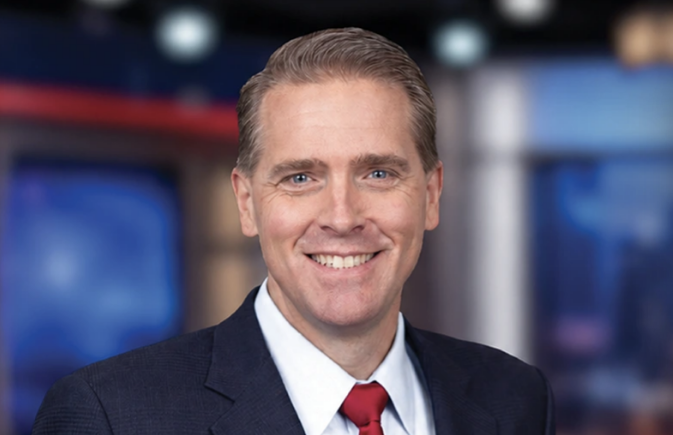
Scott Jennings should not have been a...
The phrase “click to cancel” has become...

It began with a handful of consumer...

Business involves a lot of planning:...

It’s the kind of incident that shakes...

As self-storage demand continues to grow in...
When customers entrust their physical...
The self-storage industry has spent the...