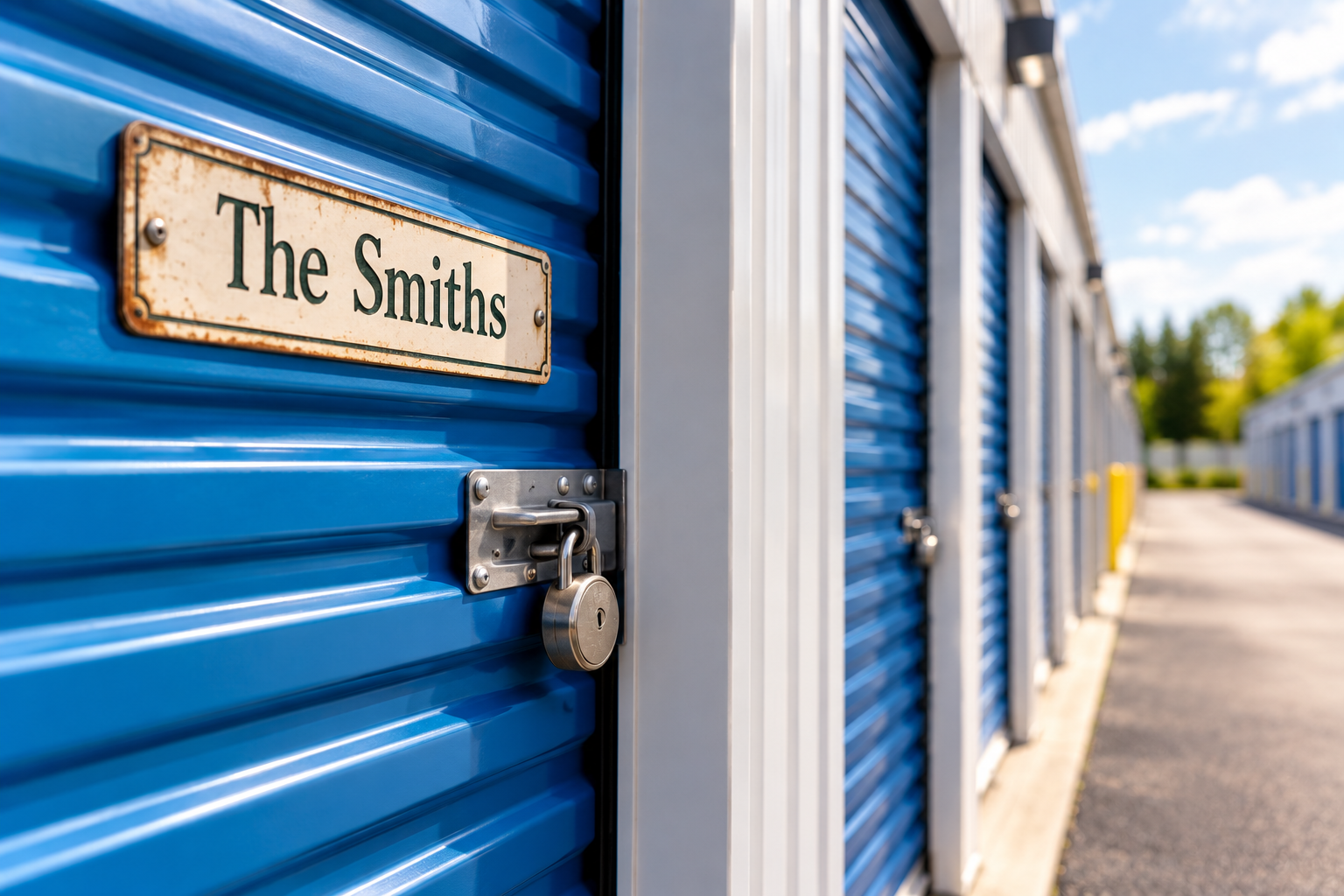

It’s 2021 and the country is at the height of the worst pandemic in its history. Amid the chaos, self-storage development explodes as remote work gives people the freedom to move, offices close or downsize, and guest rooms and garages become home offices and gyms. Suddenly, the often-overlooked self-storage industry becomes the darling of Wall Street and the real estate sector.
But as the pandemic waned, so did the demand for storage. By 2023, the slowdown was attributed to a “reversion to the mean,” with things just returning to normal following the COVID spike.
Three years later, what is “normal?” Is the industry still cooling off, and what does the future of self-storage development look like?
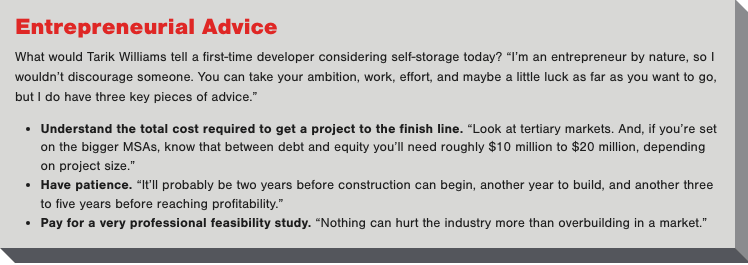
Tarik Williams, president of TLW Construction, agrees, but he also sees financing as a dividing line between projects that move forward and those that don’t. “There’s a handful of smaller operators that we work with who have been able to set up financing and get projects to the finish line, but right now the majority of our clients are all publicly traded or very large and well-funded institutional capital and private equity groups. That’s where the development is coming from right now.”
Along with high interest rates, Noah Mehrkam, CEO of Arcland Development, believes elevated construction expenses, pricey land parcels, and rising soft costs like permits, utilities, and engineering will continue to hold back development. “All these factors have made many projects difficult to pencil.”
Per Mehrkam, that reality means recovery is still years away. “I don’t expect a broad-based recovery anytime soon, certainly not before 2028. In fact, I don’t expect any meaningful relief until maybe 2030. Operators and developers need to be patient and realize that market cycles aren’t always predictable.”
Development has increased supply by roughly 3.5 percent to 4 percent annually for nearly a decade, Degner says, even though population growth has been significantly lower. “Development incentives were and continue to be misaligned,” he states. “You have these merchant developers who earn money through development fees and by raising capital. They themselves typically have little skin in the game, with minimal personal capital invested.”
Third-party management companies may have contributed to the current oversupply. “Managing other properties earns them money and helps grow their platform, allowing them to split fixed costs across more facilities,” says Degner. “Wanting to reap those rewards can lead to aggressive proformas, which can result in projects being built that should not have been.”
And then there’s the industry newcomers who haven’t received the slowdown memo. Degner recalls one developer who built multiple facilities despite lacking relevant real estate experience. “He raised money from his country club contacts and underwrote projects by assuming rents 20 percent higher than nearby competitors,” he says. “I think many of these new developers may be relying on outdated assumptions about self-storage profitability.”
Southwest-based Williams, on the other hand, has seen costs come down about 10 to 20 percent depending on project type since the peak in 2023. “When subcontractors are hungry, their pricing is more competitive, and that’s part of what’s driving the cost down.”
Tariffs have not posed a problem for TLW; Williams believes concerns surrounding labor have been overstated, arguing that companies already complying with labor laws have seen little impact. That doesn’t mean projects are being built like they used to be, however. In peak years, a lot of unique ideas were brought to self-storage, says Williams, like nicer finishes, conference rooms, coffee bars, video game corners, wine storage, and other nuanced extras that aren’t core to the business. “Most of those have fallen by the wayside, unless it’s a concession made for zoning approvals, such as a community room that can be used for meetings or gatherings.”
Williams has seen fewer conversions due to costs as well. “Unless it’s a big open building bought at an absolute rock-bottom price, developers often don’t find conversions to be the right way to go,” he says. “A lot of vacant office buildings were looked at for that purpose because post-COVID office vacancy was such a problem. However, these multistory buildings aren’t built with the type of loads needed for storage, so they require significant structural modification and that’s not cheap.”
While construction costs remain a challenge, Noah Starr, CEO of TractIQ, says deals that don’t pencil today may also be the victim of a revenue reset—and he has the numbers to prove it. Drawing from the thousands of facilities tracked during both periods, data reveals that same-store rates for a standard 10-by-10 non-climate-controlled unit are down roughly 25 percent from their peak in 2021, a drop from about $1.90 to $1.43 per square foot. “I looked at same-store data on purpose, so panel growth doesn’t inflate the drop,” Starr says. “Across approximately 2,400 facilities, physical occupancy fell from approximately 92 percent in 2021 to approximately 84 percent in 2025. So, anyone still underwriting to 2021 rents is solving the wrong equation.”
Despite those concerns, Degner is quick to point out this isn’t a doomsday scenario, as most facilities remain profitable, occupancy declines have not created widespread distress, and banks are not taking properties back. “This is in no way comparable to past office-sector collapses. The industry remains healthy, but developers need to be exercising more discipline and doing more realistic underwriting. We’ve got a good thing going in this industry. Let’s keep it that way.”
Mehrkam agrees. “Self-storage development is not dead. Opportunities still exist in undersupplied markets, particularly secondary markets where barriers to entry remain high. Developers who have strong market data, local knowledge, and patience can still find successful projects. Those unicorn sites are out there.”
Brad Hadfield is MSM's lead writer and web manager
Popular Posts

Joe Shoen is taking a stand. In our...

Self-storage software is no longer...

Joe Shoen has had enough.

The self storage industry is in a precarious...

From policy pivots in Ottawa to tariff...

This interview is from July 24, 2024.
Joe Shoen, CEO of U-Haul, has had enough.

Some recent lower court decisions have been...

Rising tides lift all ships, but in 2025 it...

In a record-breaking deal finalized May 12,...
Recent Posts

It’s 2021 and the country is at the height...
In self-storage, operators tend to fixate...

Online reviews have become one of the most...

Much has already been discussed on the new...

Brad Relford’s career didn’t start in...

Innovation often begins with curiosity....