

The thought of an ADA-related lawsuit can keep self-storage owners and developers up at night. But achieving compliance isn’t mysterious, impossible, or prohibitively expensive. When addressed early with the right professionals, it becomes design-driven, manageable, and often surprisingly affordable. To ensure a facility follows an ADA blueprint, planning must begin early whether the project is a new build, an expansion, or a conversion.
Although ADA standards are usually vetted during building plan check, mistakes can occur earlier in the process that severely impact project timing and cost. For example, Meinecke has seen project teams fail to account for access to the right-of-way (ROW) very late in the game. “This cut into the building’s square footage because the drive aisles were not wide enough to accommodate access while maintaining fire apparatus clearance,” he says. “The team was ultimately forced to add unplanned ROW access and spend money to do so.”
Not all states take the same approach to ADA compliance. “Texas has a really good approach to addressing accessibility,” says Jeff Dallenbach, founder and managing partner of Texas-based DALLENBACH-COLE. “Upon completion of construction documents, the project plan must be registered with the state and submitted for permitting. Then, the firm hires a third-party accessibility company to review the documents and flag anything that needs clarification or correction.”
While this may just feel like an extra step in an already long process, Dallenbach believes it’s valuable. “At that point the project is still being bid and permitted, so you can make modifications if necessary and get ahead of any potential issues.”
As construction wraps up, the accessibility company returns to confirm the build was completed as planned and issues a letter of acceptance. “Texas is rather groundbreaking in this regard,” says Dallenbach. “Some people don’t like dealing with it, but it helps to have an outside set of eyes addressing accessibility needs before it’s too late.”
While some builds are straightforward, others are constructed on unique or challenging sites. “Sites with significant topography present their own design challenges, not only with unit distribution but also parking and pedestrian circulation,” says Meinecke. “Regardless of site difficulty, ADA needs to be considered up front to prevent costly changes later.”
Expansion projects must also be viewed through an ADA lens. “Just because your initial building is compliant doesn’t mean additions don’t have to be,” says Dallenbach. “A percentage of units must be accessible. If you add 100 units, you need to add more accessible ones, so the percentage remains the same. You may also need additional accessible parking and other accommodations.”
If a client anticipates future expansion, particularly for a phased project, being forward thinking is essential. “You may plan for ADA accessible units in each phase,” Meinecke says, “or if you want to keep them all in the same proximity, include extra ones in the initial build so that in later phases you’re already covered percentage-wise.”
Dallenbach notes a silver lining when it comes to ADA compliance in self-storage. “Other types of builds can be far more complex,” he says. “With self-storage, you plan for parking, entrances, an office, bathrooms, and storage units. It’s not like designing a hospital with countless room types to consider.”
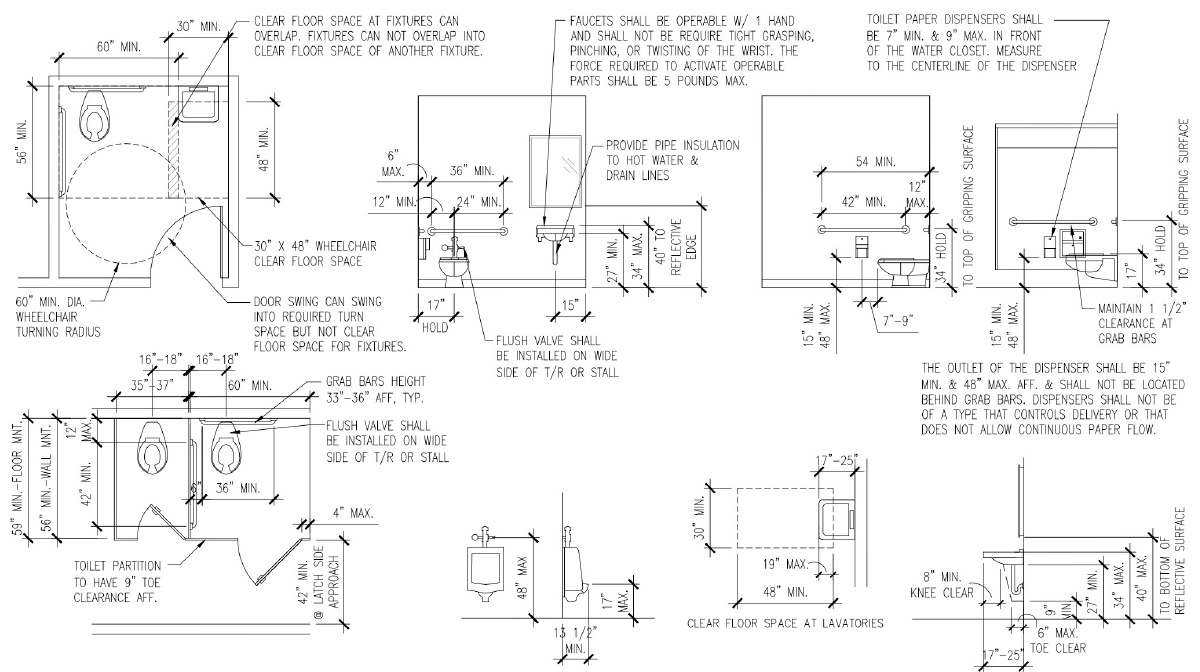
Image credit: DALLENBACH-COLE ARCHITECTURE
Contractors rely on those plans for details ranging from how a rain lip (or rain key) is formed at the unit threshold and the number and design of accessible units, to broader elements such as entry alcoves, man doors, and areas of refuge to ensure safe access and egress. “Some features are inherent in self-storage,” Guerin adds. “There are hallway width requirements for ADA, but self-storage hallways typically meet them by default. Customers need to maneuver large items like furniture, so the space naturally accommodates someone using a wheelchair.”
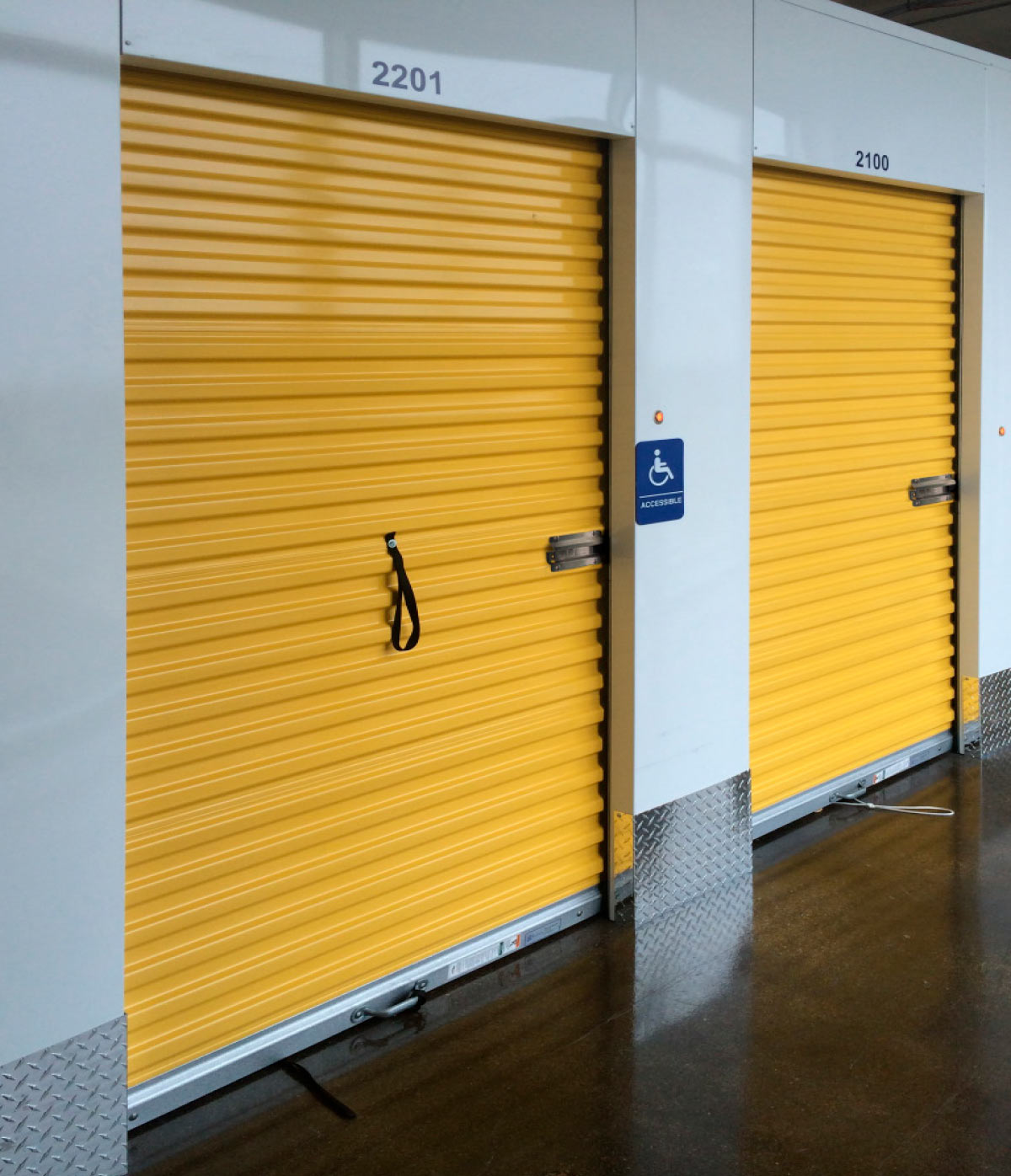
In smaller projects or rural expansions, an architect may not be required. “In these situations, builders often exclude ADA compliance from the base bid while recommending compliant construction practices,” says Guerin. “For example, a rain lip should slope gradually over 18 inches or measure less than one-half inch. Older designs used lips as high as one and a half inches, which can create barriers for wheelchair users.”
Technology can also support accessibility goals. Roc Hughes, vice president of self-storage sales for Janus International, says that when the company launched its original Nokē products and app, it made sure they were ADA compliant. “The Nokē platform allows users to access units via smartphone or fob, reducing the need for physical keys, codes, or manual handling that may be difficult for some people,” says Hughes. “Customers can also gain access at entry points using Nokē Pad and Nokē Screen. There’s also Nokē Elevate, our automated doors which provide easy accessibility for wheelchair users and others with physical impairments.”
In addition, Janus’ doors have been designed with compliant tensioning (the company’s 650 and 750 roll-ups require a maximum of just five pounds of continuous force to open and close fully). “These doors are so easy to open and close,” Hughes says. “They require less force than many other roll-up doors and check all the boxes when it comes to the ADA.”
When a developer brings Janus on board, Hughes says their team will guide facility owners on the best way to distribute accessible units across various sizes and classes. For facilities with 200 or fewer units, that means five percent must be ADA accessible; for those with over 200 units, you need 10 accessible ones plus an additional two percent. And while these percentages are required, the units don’t have to be rented exclusively to people with disabilities; for example, if you only have one 10-by-10 left and a non-disabled person wants to rent it, the law won’t stop you from earning that revenue. “ADA accessible units should be the last to rent,” says Scott Zucker, partner at Weissmann Zucker Euster + Oblinger, P.C. “Try to hold them in inventory, if possible, but if you have an opportunity to rent it to someone else, you can.”
The best thing a developer planning a conversion can do is have a conversation with their local inspector beforehand. Anderson says they may be willing to accommodate or make special concessions. “If the developer has worked out something with the inspector that deviates from the norm, that’s what we’ll do. We don’t do regulation interpretation; we follow direction.”
Trac-Rite will bring up ADA compliance, however, if the client does not during a pre-production conversation. “Honestly, outside of the rare occasions, the cost to be compliant is a low dollar amount, so it’s generally not an issue for most clients,” Anderson says.
Of course, motorized doors cost more and require wiring, something that some operators don’t want to pay for or deal with. But swing doors in the state must be as wide as the roll-up door that would have been used, which isn’t always feasible for large units. “A typical swing door is three feet. So, for one project with eight-foot roll-up doors, we had to build double swing doors and extend them to four feet each to meet the code’s requirement. Because of course no one wants, or has space for, an eight-foot swing door.”
For that particular project, Anderson says they ended up building the ADA units on the corners of the building, so they could install the swing doors on one side and a roll-up door on the other. “This kept the facility compliant, but also made the unit suited to non-disabled people as well, because they typically don’t want swing doors.”
ADA regulations may also not apply to a conversion if it’s not “readily achievable,” meaning compliance would be excessively expensive or difficult. “Common readily achievable improvements include installing ramps where stairs are the only access, adding curb cuts, widening doorways, improving door hardware, designating accessible parking, repositioning furniture to create clear paths of travel, and lowering controls such as light switches and keypads,” says Zucker. “While not every modification is feasible in every setting, even partial improvements that enhance accessibility are encouraged.”
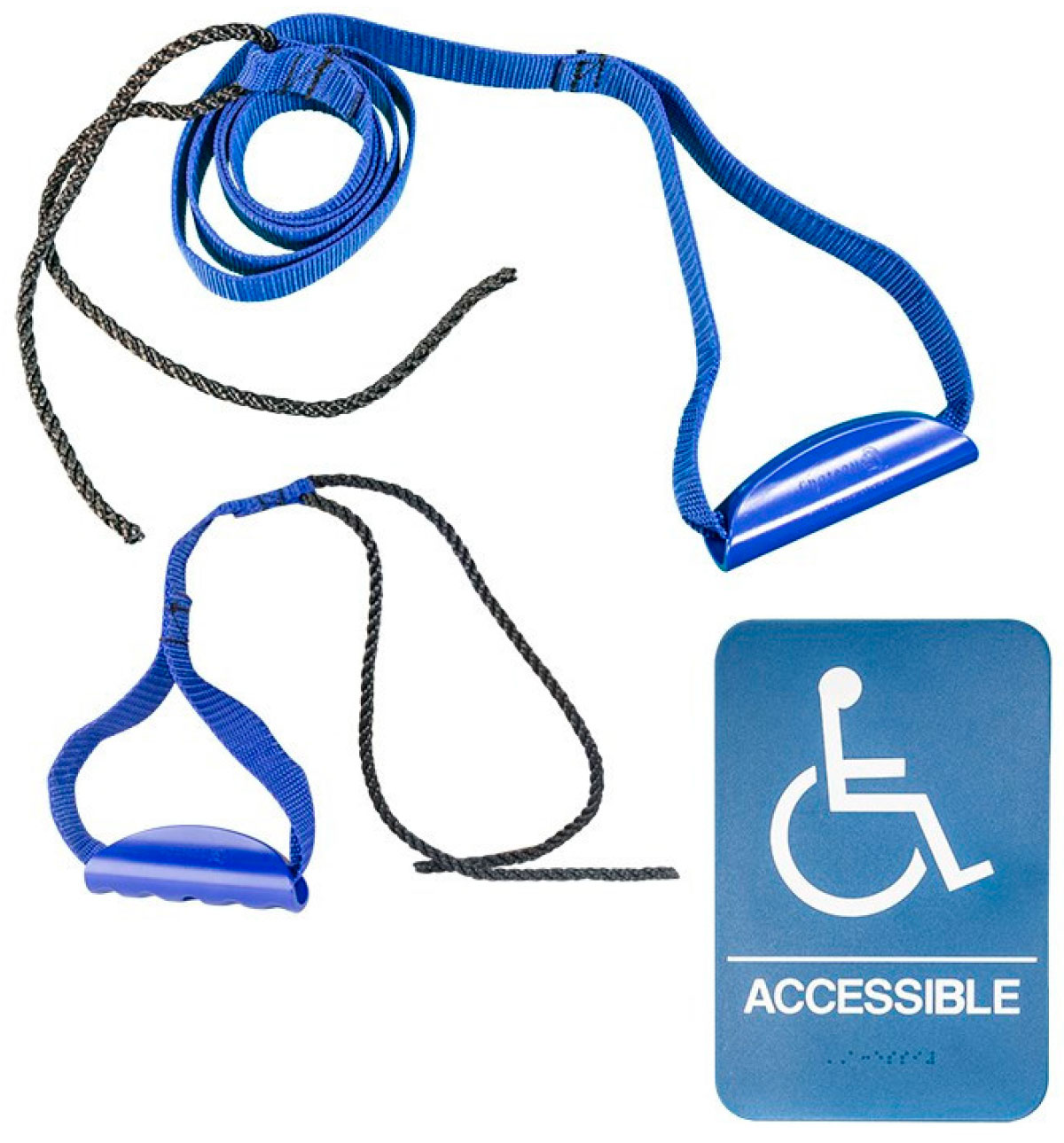
Some of these improvements can be accomplished using ADA retrofit kits designed to improve accessibility at individual units, many of which are offered by manufacturers across the self-storage industry. These kits may include features such as accessible door pulls, rope assist systems, braille identification plaques, and threshold ramps that reduce barriers and improve usability.
Carlos Kaslow, partner with the Self-Storage Legal Network, does make it clear, however, that this kind of flexibility rarely applies to newer buildings (structures built after accessibility laws took effect). “These operators cannot rely on impracticality arguments simply due to cost,” he says. “Typically, this argument will only hold water when you’re converting older structures. A century-old building, for example, may have upper floors accessible only by stairs, and installing an elevator could be deemed cost-prohibitive, so full accessibility may not be required.”
“If violations are confirmed, sometimes the most effective strategy is rapid remediation and prompt settlement,” says Kaslow. “Large operators often begin repairs immediately. In some cases, courts have considered prompt corrective action sufficient compliance, reducing potential attorney fees and weakening plaintiffs’ claims.”
A more recent phenomenon that can be a headache for self-storage owners is “drive-by lawsuits,” in which an individual drives around looking for potential ADA violations. If they believe they’ve spotted one, they’ll send a “tester” onto the property—tape measure, level, and camera in hand—to confirm. The goal of these opportunists is to squeeze money from small business owners who cannot afford an attorney or are afraid of repercussions. “If there are violations, they are very difficult to defend,” says Zucker. “So, most business owners end up settling the lawsuits, typically for what is claimed as the plaintiff’s attorneys’ fees.”
Adds Zucker, “Accessibility enforcement varies by region and is influenced by litigation trends and advocacy efforts. Ultimately, designing for accessibility from the outset reduces risk, improves usability, and protects operators from costly disputes.”
Popular Posts
Joe Shoen is taking a stand. In our...

Self-storage software is no longer...
Joe Shoen has had enough.

The self storage industry is in a precarious...

From policy pivots in Ottawa to tariff...

This interview is from July 24, 2024.
Joe Shoen, CEO of U-Haul, has had enough.

Some recent lower court decisions have been...
Rising tides lift all ships, but in 2025 it...

In a record-breaking deal finalized May 12,...
Recent Posts



Most growth strategies in self-storage...

Stability and resiliency in the...

The age of artificial intelligence poses a...
.jpg)
The roar of the 1920s came to an abrupt halt...

Scott Jennings should not have been a...
The phrase “click to cancel” has become...
