

Brazil is known for its vibrant culture, futebol (soccer) fanatics, and an Amazon that grows trees instead of boxes. It was never really known for self-storage, but that’s changing. Now, facilities are beginning to dot the landscape, becoming one of the country’s fastest-growing commercial real estate sectors. A slowdown isn’t in sight, with new projects in the pipeline as entrepreneurs, developers, and international capital pile in.
One of the sector’s newest players making a name for itself is SmartStorage, a company with lean operations and a sharp strategy that reflects where the market is headed. To understand their path to success, however, it helps to look at the pioneers who set the stage.
Also in 2013, GoodStorage entered the arena under real estate executive Thiago Cordeiro’s watch (he remains CEO and is now president of the Brazilian Self Storage Association, ASBRASS). The company expanded aggressively, eventually becoming Brazil’s largest operator and acquiring GuardeAqui in 2024, though both brands continue to operate independently.
Para Guardar also set up shop that year in Manaus, but it did things a little differently by converting an empty warehouse into a Class-A facility. It was an approach that would later become standard practice for many operators. “I chose self-storage because it combines the excitement of retail with the stability of real estate,” said founder José Benchimol.

“More countries around the world are picking up on this trend, and nowhere is that more evident than in Latin America,” Blum told MSM in 2013. Despite his confidence, Brazilian consumers still needed a little convincing. But Blum didn’t rely on billboards, which can be hard to lease due to strict regulations; instead, he hired “storage ambassadors” to walk São Paulo’s busiest streets, handing out mini-CDs explaining the concept.
His son Eric, who’s picked up the mantle at BMSGRP, reflects on those early days. “Dad recognized that traditional advertising was going to be difficult, and it really wasn’t a good outlet to explain the concept of self-storage anyhow,” he says. “Handing out those CDs was guerilla marketing at its finest!”
“We’re witnessing a reorganization of urban space,” Cordeiro recently told Valor International. “Self-storage has moved beyond a niche market to become part of the urban infrastructure.”
The rise of e-commerce has added fuel. Mercado Livre, the region’s dominant online retailer, has enabled thousands of small businesses to flourish without traditional warehouses. Many of those sellers rely on self-storage for inventory, logistics, and flexibility. Urban growth, unpredictable real estate cycles, and rising land costs have all converged to create an ideal environment for the industry’s next stage.

Kovesi’s roots are in the technology industry. In the late 1980s he built a thriving hardware company that is still going strong today, but by 2001, he was looking at opportunities in real estate, dabbling in them passively. “Years later, after researching investment opportunities, I found self-storage offered higher yields and less volatility than other asset classes,” says Kovesi.
Kovesi signed up for a Self Storage Congress event and met Francisco Canuto, an industry vet who’d worked on GuardeAqui. “Canuto’s operational knowledge was a key factor in SmartStorage’s success and growth,” says Kovesi. “I initially approached to ask him to be a consultant, and he’s now the co-founder with a CEO role, giving him real skin in the game.”
The duo opened the first SmartStorage facility during the height of the COVID pandemic. It was deemed risky, but it paid off as demand for storage spiked globally. Since then, SmartStorage has grown to nine facilities with stabilized occupancies north of 90 percent, well above the national average of 80 percent.
But SmartStorage’s edge isn’t just timing—it’s efficiency. The company operates with only 12 employees, relying heavily on digital onboarding and mobile access technology. Tenants can move in, access their units, and manage their accounts entirely through an app.
Kovesi also created a proprietary referral dashboard, building an ecosystem of partners who use it to send their clients storage options. “Individuals receive 15 percent of the first year’s revenue from each renter they refer, while agencies can split commissions. It gives us a bit of an edge over competitors who depend on expensive digital ads.”
SmartStorage has also struck partnerships with multifamily property owners and short-term rental platforms, embedding referral links in their apps and websites. The result is a growing network of partners incentivized to send tenants their way.
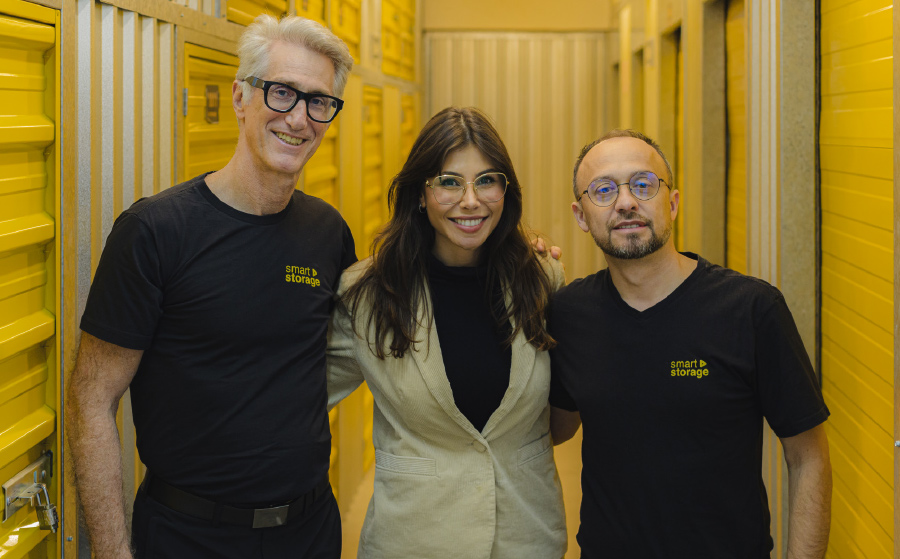

The company has already appointed a head of expansion to formalize its franchise structure and aims to become one of the top three operators in Brazil within five years. Because SmartStorage doesn’t build from scratch, preferring to repurpose 20- to 30-year-old industrial buildings, franchisees receive healthier margins.
“This strategy also cuts capital costs, speeds time to market, and lowers environmental impact,” says Kovesi. “These cost advantages let us offer more favorable royalty terms and scale without massive debt.”
Brazil’s self-storage story began with a handful of facilities and a box of mini-CDs. Two decades later, it has grown into a multimillion-dollar industry, with SmartStorage and its industry peers racing to define its future.
Recent Posts

Much has already been discussed on the new...

Brad Relford’s career didn’t start in...

Innovation often begins with curiosity....

Most growth strategies in self-storage...

Stability and resiliency in the...

The age of artificial intelligence poses a...
