
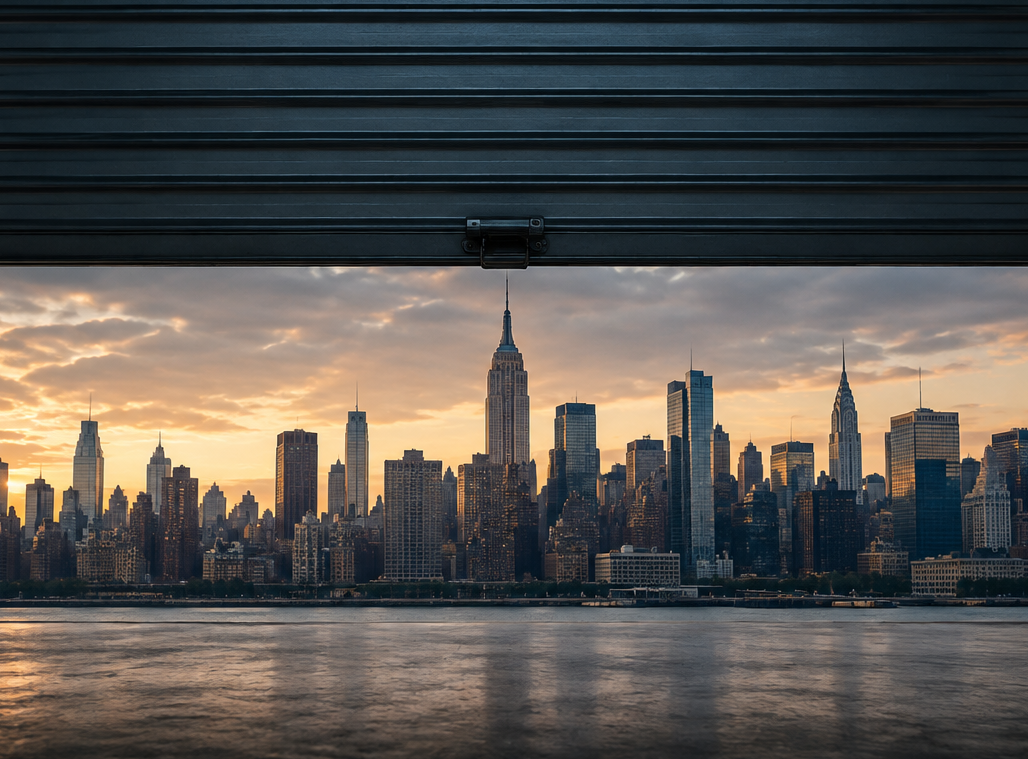
Warm Up: Considerations For Heated Self-Storage Units
When customers entrust their physical assets to a self-storage facility, they naturally want to feel assured that their items will be kept safe and sound. That means proper security precautions, but it might also mean climate control. Simply put, temperature moderation can be a critical way for self-storage operators to ensure that the items in their care are maintained in pristine condition.
Finding the right heating solution can be a challenge, as there are concerns with both efficiency and safety. It’s crucial for operators to be strategic, seeking an approach that supports operational efficiency, customer satisfaction, and long-term profitability.
More Than A Feature
Many stored items, from wood furniture to electronics to textiles, are sensitive to fluctuations in temperature. Prolonged exposure to the cold may result in cracking, warping, brittleness, or damage related to recurring condensation.
For self-storage operators, this not only means a heightened risk of customer dissatisfaction but also a greater likelihood of insurance claims. This is to say nothing of reputational damage; being known as the self-storage facility where items are regularly ruined can be a death knell.
Challenges Of Heating Storage Space
Unlike more conventional commercial buildings, self-storage facilities are often designed without centralized, forced-air heating. Retrofitting may be possible, but it also tends to be expensive and disruptive. There are also major logistical complications, especially in facilities with multiple buildings, varying unit sizes, or outdoor access corridors.
Unit heaters have emerged as an effective alternative. These heaters can be installed with minimal requirements for ductwork and other infrastructure upgrades, and they can be selectively placed in the self-storage units where they are needed most. For creating ambient warmth in self-contained areas, unit heaters can be a cost-effective option.
Making The Most Of Unit Heaters
When selecting a unit heater, it’s important to verify that it’s sized to meet the cubic footage of the space where it’s intended for use. When a self-storage unit is undersized, it may not be able to keep pace with significant drops in temperature, leading to uneven results. And when units are too large, they may cycle too frequently, straining the equipment and wasting a lot of energy.
Smart placement is important, too. The most effective positions tend to be areas where cold spots naturally develop, such as near exterior walls or along entry points. Placing unit heaters in these areas can lower the facility’s overall temperature gradient. This leads to improved performance and more efficient energy consumption as systems won’t have to work as hard to overcompensate.
Insulation And Air Leakage
Insulation matters because it determines how well the building maintains heat. Properly insulated walls, ceilings, and doors function as barriers against external temperature fluctuations, thus reducing the workload for heating systems. Insulation upgrades can deliver a strong return on investment by improving both energy efficiency and tenant satisfaction. This is particularly true in older self-storage facilities where insulation may be badly out of date or of a low rating (R-value).
It’s similarly important to manage air leaks. Even high-caliber heating systems will struggle to maintain consistent temperatures if warm air is constantly escaping the facility. Gaps around doors, windows, and structural joints may allow cold air to penetrate units, endangering stored items. Sealing these gaps with weatherstripping, door sweeps, and sealants is a low-cost improvement that can significantly enhance temperature stability throughtout the facility.
Keeping Contents Safe And Secure
More Content
Popular Posts
Joe Shoen is taking a stand. In our...
Self-storage software is no longer...
Joe Shoen has had enough.
The self storage industry is in a precarious...
From policy pivots in Ottawa to tariff...
Joe Shoen, CEO of U-Haul, has had enough.
In a record-breaking deal finalized May 12,...
This interview is from July 24, 2024.
Rising tides lift all ships, but in 2025 it...
Some recent lower court decisions have been...
Recent Posts
As self-storage demand continues to grow in...
When customers entrust their physical...
The self-storage industry has spent the...


For two decades, Andrew Hess’ job was...
Uniti, a provider of AI-powered agents for...
The shift toward automation in self-storage...
We live in the future now. Everything’s...